AC Running But Not Cooling Baldwin County Guide
Air moving through the vents does not prove cooling is working. These seven possible causes explain what to report, which simple checks are safe, and when to stop.
Your Baldwin County troubleshooting guide — safe observations and when to call for service.
You hear it running. The fan is blowing, but the air from your vents is warm or barely cool. If the home is becoming uncomfortably hot, move to a cooler place while arranging help. Older adults and young children can be especially vulnerable to heat. If someone has confusion, loses consciousness or shows other signs of heat stroke, call 911. CDC explains heat-related illness warning signs.
A cooling problem does not by itself mean you need a new system. Start with the safe checks below; the cause and repair options need diagnosis.
Here are seven possible reasons an AC can run without cooling properly, from settings and airflow to components that need professional service. Similar symptoms can have different causes.
Start with the thermostat and an accessible filter, without opening equipment panels.
1. Dirty Air Filter — Check Airflow First
What’s happening
A filter packed with dust, pet hair, pollen or debris can restrict airflow across the indoor evaporator coil. Restricted airflow can contribute to icing and poor cooling; a dirty filter is one possible cause, not a diagnosis.
What to Consider About Your Filter
Dust, pollen, pets and system use affect how quickly a filter gets dirty. Check it according to the equipment and filter manufacturer’s instructions. A standard particle filter does not remove indoor humidity.
What you can do right now
Turn cooling off before checking an accessible return-grille or designated filter-slot filter. Follow the equipment instructions; do not remove electrical or service panels.
Use the specified size and filter type, fitted in the correct airflow direction. Keep a filter installed during operation.
If you see ice on accessible refrigerant lines or suspect a frozen coil, leave cooling off and arrange service. Do not chip ice, apply heat or open the air handler to inspect it. Thawing alone does not identify or fix the cause.
When to call a pro
If the safe filter and thermostat checks do not restore normal cooling, or you see ice, call (251) 751-9908. We can assess the cause and explain recommended work and pricing.
2. Thermostat Issues — The Overlooked Obvious
What’s happening
The thermostat is the brain of your HVAC system. If it’s giving the wrong instructions, even a perfectly healthy AC won’t cool your home. This covers a range of issues: wrong mode selected, dead batteries, a thermostat that’s lost its calibration, or a programmable thermostat with a schedule override you didn’t know about.
Why it gets missed
A thermostat setting or battery issue can resemble an equipment fault. Check the displayed mode and any active schedule before assuming a major repair.
What you can do right now
Run through this checklist:
- Mode: Check that COOL is selected when cooling is needed.
- Fan: A continuous fan setting may move air even when cooling is off. Follow your thermostat’s guidance; fan operation alone does not prove cooling is working.
- Temperature: Choose a comfortable setting below the displayed room temperature and allow any specified startup delay. A much lower setting does not cool the air faster.
- Batteries: Follow the correct replacement instructions if your thermostat uses them; do not touch wiring.
- Schedule: Check whether a programmed or away setting changed the requested temperature.
When to call a pro
If the thermostat display is completely dead even with fresh batteries, the problem might be a blown fuse on your air handler’s control board or a wiring issue — not the thermostat itself. If you’ve verified all the settings above and the system just won’t respond, it’s time for a diagnostic. Call (251) 751-9908.
3. Dirty Condenser Coils — Your Outdoor Unit Is Suffocating
What’s happening
The outdoor condenser releases heat collected from inside your home. Its fan moves air across the coil. Dirt, pollen and other buildup can reduce airflow and heat transfer, contributing to reduced cooling. Visible buildup alone does not establish the cause of warm air indoors.
Think of it like trying to cool yourself with a fan while wearing a winter coat. The fan is working. You just can’t feel it.
Outdoor Conditions to Check
Check the actual condition of your unit and follow its care instructions.
Pollen and debris. Outdoor buildup can obstruct airflow. Look from outside the grille; do not reach inside the unit.
Coastal exposure. Ask your technician to assess visible corrosion and follow the manufacturer’s maintenance guidance for the equipment and location.
Grass and landscaping. Keep clippings and loose debris away from the unit and maintain the manufacturer’s specified clearance.
What you can do right now
Go outside and look at your condenser unit.
- Look from a safe distance. Note visible leaves, debris or vegetation obstructing the unit.
- Keep clear of moving parts. Do not put a hose, hand or tool through the grille, remove the fan assembly or open panels.
- Arrange cleaning when needed. Leave internal coil cleaning and electrical isolation to a qualified technician. Do not use a pressure washer on the coils.
When to call a pro
If coils look dirty, bent or corroded, ask for an assessment. Cleaning methods must suit the equipment and condition. Call (251) 751-9908 to discuss service or maintenance options.
4. Refrigerant Leak — The Problem You Can’t Fix Yourself
What’s happening
Refrigerant carries heat through a sealed circuit; it is not normally consumed during operation. A low charge can indicate a leak or an earlier charging problem. A technician needs to determine the cause.
An incorrect refrigerant charge can affect cooling, but running without reaching the set temperature can have other causes. Testing is needed before refrigerant service is recommended.
Observations to Report
- The AC runs for long periods without reaching the set temperature
- Ice is forming on the copper refrigerant line (the larger, insulated one running from the outdoor unit to the house)
- You hear a faint hissing or bubbling sound near the indoor unit
- Your energy bills have spiked without any change in usage patterns
- The system cools somewhat during mild weather but can’t keep up on hot days
What you need to know about refrigerant types
Check the equipment nameplate rather than identifying refrigerant by installation year. Existing R-22 equipment can still be serviced using available recovered, recycled or reclaimed refrigerant; the phaseout does not automatically require replacement. EPA explains options for existing R-22 systems.
Any repair or replacement must use refrigerant and components approved for that equipment. Refrigerants are not interchangeable; compare the actual service options and written estimates.
What you can do right now
Leave refrigerant service to a qualified technician. Do not add, vent or attempt to substitute refrigerant yourself. Ask what testing supports the diagnosis and whether repair, further testing or replacement is appropriate.
What you can do: report visible ice, unusual sounds and changes in cooling. These observations do not confirm a leak. Leave cooling off if ice or an apparent equipment fault is present and arrange service.
When to call a pro
Call (251) 751-9908 for AC repair service. The technician can test the system, explain the findings and discuss appropriate repairs before any refrigerant service.
5. Frozen Evaporator Coil — When Your AC Turns Into an Ice Machine
What’s happening
The indoor evaporator coil absorbs heat as air passes over it. If the coil becomes too cold, moisture can freeze on it and affect airflow and cooling.
Why this happens
Freezing is a symptom, not a diagnosis. Restricted airflow, refrigerant conditions, controls or other mechanical problems may be involved. A technician must determine the cause; visible ice does not prove a leak.
What you can do right now
If you see ice on accessible refrigerant lines, leave the equipment closed and follow these steps:
- Turn cooling OFF at the thermostat. Do not continue cooling while ice is present.
- Check only accessible items. With cooling off, check the designated filter and look for furniture blocking return or supply vents.
- Leave the ice alone. Do not chip, scrape or heat it, and do not open the air handler.
- Arrange service. Report the ice and any water leakage. Keep away from water near electrical equipment.
Ice can melt before the underlying fault is resolved. Ask the technician when the system can safely return to operation.
When to call a pro
If you see ice, leave cooling off and call (251) 751-9908. You do not need to wait for repeated freezing. Tell the technician what you observed; ask when operation can safely resume.
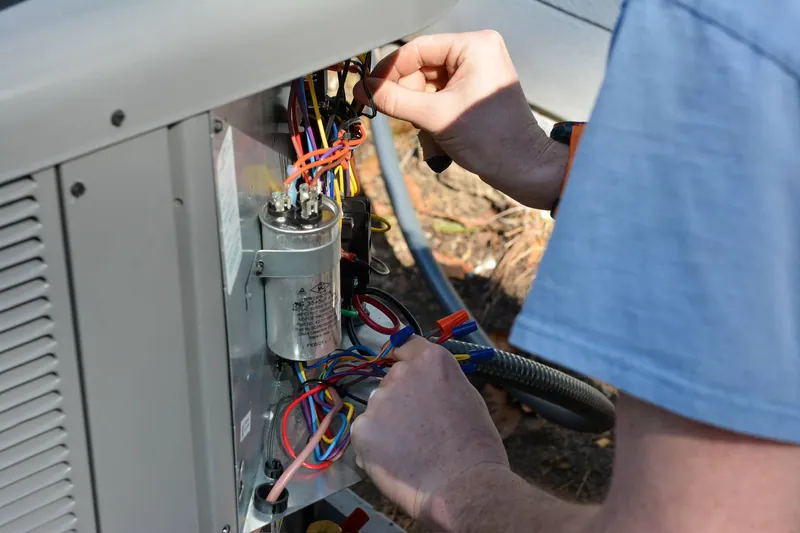
6. Capacitor or Fan Motor Problems
What’s happening
Your AC system uses motors to move air and circulate refrigerant. Some motor designs use capacitors; others use electronic controls. A failed motor, capacitor or control can interrupt normal operation.
When a capacitor fails, the motor it supports can’t start — or it starts sluggishly and overheats. When a fan motor fails, the fan stops spinning. In either case, the system can’t move air or pump refrigerant properly, and you get warm air from your vents.
Conditions to Discuss
Heat, operating conditions and equipment condition can affect electrical components. Their condition must be tested; climate alone does not establish a particular service life.
A technician can check electrical components and connections for damage or corrosion.
What you can check
From a safe distance, note whether the outdoor fan is moving or making unusual sounds. A stationary fan or hum can have several causes. Do not reach into the unit or try to spin the fan by hand. Components can remain electrically hazardous with power off.
If the outdoor unit appears to run but little or no air reaches the rooms, report that pattern. The indoor blower is one possible area to check; airflow alone does not identify the failed component.
When to call a pro
This is not a DIY repair. Capacitors can retain a dangerous electrical charge with the equipment off. Do not open electrical panels. A qualified technician should test the equipment and confirm the fault.
Repair costs depend on the diagnosed fault, equipment, parts and warranty coverage. Ask for a written explanation and price before approving repairs.
If the unit hums or buzzes without normal operation, leave cooling off and call (251) 751-9908. Same-day service is available; confirm the arrival window and any parts or follow-up work needed.
7. Compressor Problems
What’s happening
The compressor is the heart of your AC system. It pumps refrigerant through the entire loop — from the evaporator coil (where heat is absorbed from your indoor air) to the condenser coil (where heat is released outside). Without a functioning compressor, the system physically cannot cool your home. It’s like a car with a dead engine — everything else might be fine, but it isn’t going anywhere.
A change can appear suddenly or develop over time. Share your actual service history rather than assuming a particular failure pattern.
What causes compressor failure
- Chronic low refrigerant. A slow leak over months or years means the compressor operates without proper lubrication (the refrigerant carries oil). This wears the internal components prematurely.
- Electrical problems. Voltage spikes, bad contactors, or failed capacitors can damage the compressor windings over time.
- Operating conditions and wear. Long operation and unresolved airflow or refrigerant problems can stress equipment. Runtime alone does not diagnose a failed compressor.
- Contamination or electrical damage. A technician must assess the extent of damage and required cleanup or repairs. Contamination does not by itself establish that the entire system must be replaced.
What you can check
A silent outdoor unit, clicking or humming can result from several electrical or mechanical problems. Report what you hear from a safe distance; do not reset breakers repeatedly or open panels to test components.
The honest conversation about cost
Ask for a written repair estimate and confirmation of the actual parts and labor warranty coverage. Costs vary by equipment and the work required.
Compare repair and replacement using the system’s condition, repair history, warranty coverage and your plans for the home. Age alone does not decide which option is appropriate.
A system replacement may be an option to compare. Review the proposed equipment, installation scope, efficiency ratings and warranty terms alongside the repair estimate. Actual energy use and equipment life depend on the installation, home and maintenance.
If you suspect compressor failure, call (251) 751-9908. We’ll diagnose the actual problem and give you honest options, not a sales pitch.
When to Stop Troubleshooting and Call a Professional
Stop at the safe observations described above. Leave internal electrical, motor, refrigerant and coil work to a qualified technician. A website checklist cannot establish that equipment is safe to repair yourself.
Call immediately if you notice:
- Smoke, fire or active sparking: leave the area and call 911 from safety. Do not approach equipment or operate nearby switches.
- Water actively leaking from the air handler onto your floor or ceiling
- A breaker that trips repeatedly when you try to turn the AC on — this is a safety mechanism, don’t keep resetting it
- An unusual electrical smell without visible fire: stop using the system if safe and arrange professional help. Do not open equipment or touch damaged wiring.
Safety reminders:
- Never open the electrical access panel on your outdoor unit. Capacitors store charge that can shock you even with the breaker off.
- Leave refrigerant service to a qualified technician. Do not connect gauges, add refrigerant or vent the system.
- Do not keep operating apparently damaged equipment. Leave cooling off and ask for professional guidance.

What to Expect When You Call Aim
When you call (251) 751-9908, here’s what happens:
- Tell us what is happening. Mention any ice, water, unusual sounds or safety concerns when you call.
- We ask you a few questions — what’s the system doing, what you’ve already checked, how old the unit is. This helps describe the problem before the visit.
- Confirm the service window. We offer same-day service and are available 24/7, 365 days a year, with no after-hours fees. For emergency AC service, confirm availability and the arrival window when you call. Normal service and repair charges still apply.
- The tech diagnoses before recommending anything. We don’t quote repairs before we know what’s wrong. But we’ll always explain what we found, show you if possible, and give you options before we do any work.
- Review the options. We explain the findings and recommended work so you can review repair or replacement pricing before deciding.
Choose the Next Step From the Symptoms
An AC that runs without cooling can have an airflow, settings or equipment problem. Begin with safe observations and let a technician diagnose unresolved faults.
Check the thermostat, an accessible filter and visible obstructions without opening equipment. If cooling does not return to normal or you notice ice or damage, stop cooling and arrange service.
Aim serves Daphne, Spanish Fort, Fairhope, Foley, Bay Minette and nearby communities; call to confirm availability for your address. Tell us what changed, any safety concerns and when the filter or equipment was last serviced.
Call (251) 751-9908 to discuss the next available visit. Open 24/7/365 with no after-hours fees; call to confirm same-day availability.
Related reading:
LET’S TALK ABOUT YOUR HOME
Make the next step a clear one.
Tell us about your equipment and the change you have noticed.
Open 24/7 · 365 days a year · No after-hours fees
Call to confirm same-day availability. For an installation estimate, choose “Get A Free In-Home Estimate” in the booking menu.