HOME COMFORT GUIDES · 2026
How Much Does a New AC Unit Cost in Baldwin County?
Short answer: There is no single installed price for every home. Compare a written in-home quote based on your equipment, installation scope and home’s cooling needs.
When your AC stops cooling in summer, you want to understand the cost before approving a replacement.
Here’s a guide to the costs to compare when replacing an AC system in Baldwin County. Use it to prepare for an in-home estimate and understand what changes the price.
Compare the Full Installation Scope
Equipment-only prices and complete installation estimates cover different work. Use these questions to compare written estimates for your home.
| Option | Confirm what is included | Ask about your home |
|---|---|---|
| Central AC replacement | Outdoor unit, matched indoor coil or air handler, controls and installation labor | Can existing ducts, electrical service and refrigerant lines support the proposed system? |
| Heat pump system | Heating and cooling equipment, controls and any proposed backup heat | How does the recommendation meet both heating and cooling needs? |
| Higher-efficiency system | Exact equipment models, efficiency ratings and compatible controls | What assumptions support any claimed operating savings? |
| Installation work | Removal, refrigerant work, permits, electrical or duct changes, startup and warranty registration | Which items are included, optional or excluded from the written price? |
Compare what is included: Ask whether the written price covers the outdoor unit, indoor coil or air handler, refrigerant line work, thermostat, electrical work, permits and labor. A lower price may cover a different scope.
Compare itemized local estimates for your home rather than assuming a national average will match your project.
Want an exact number for your home? Call us at (251) 751-9908 for a free estimate. We’ll come out, look at your setup, and give you real options — not a high-pressure pitch.

What Actually Drives the Cost of a New AC System
Equipment is only part of the installed price. These factors help explain why quotes differ.
1. Home Size and Cooling Load
Home size is one consideration. Room layout, insulation, windows, sun exposure and local conditions also affect the cooling load.
AC capacity is often described in tons. Square footage alone cannot select the right size or determine an installed price. Ask for a load calculation that accounts for your home and local conditions.
Ask about local conditions: Confirm the climate data and humidity-control needs used for your home’s load calculation.
This is why a proper Manual J load calculation matters. It accounts for your insulation, window placement, sun exposure, and our specific climate data — not just square footage.
Ask how the selected capacity will handle both cooling and humidity. A larger unit is not automatically the better choice; the recommendation should follow the load calculation.
2. Efficiency Rating (SEER2)
SEER2 is a seasonal cooling-efficiency rating. Compare the selected equipment’s rating, installed price and expected operation for your home.
Check the actual equipment: Ask which efficiency requirements apply to the proposed system type and capacity, and confirm the matched indoor and outdoor equipment in the quote.
Compare upfront cost and operating cost: Higher-rated equipment may reduce cooling energy use, but your bills also depend on sizing, installation, insulation, weather, electricity rates and how you use the system. A fixed annual saving or payback period is not guaranteed.
Our take: Review the price difference and any savings estimate with its assumptions. Choose the equipment that fits your home, comfort needs and budget.
3. Brand
Compare the specific equipment in each quote rather than choosing by brand alone.
- Model and matched equipment: Confirm the proposed indoor and outdoor components.
- Performance: Compare documented efficiency and sound ratings for the quoted model.
- Warranty and service: Review the written coverage, registration requirements and available equipment support.
Ask about installation quality: Compare the proposed equipment, sizing, installation process and written warranty. A brand name alone does not guarantee a particular lifespan or result.
4. Ductwork Condition
Ask whether the estimate includes inspection and any needed work on:
- Leaks or disconnected sections
- Duct sizing for the proposed equipment
- Damaged or missing insulation
- Sections that need repair or replacement
Request a separate explanation and written price for any proposed ductwork so you can compare the full installation scope.
5. Refrigerant: Compare Repair and Replacement Options
A refrigerant transition does not mean every existing air conditioner must be replaced. The equipment’s condition, repair options and written costs matter.
- If your system uses R-22: New production and import have ended, but existing equipment can still be serviced with recycled, reclaimed or previously produced R-22. EPA does not require you to replace an existing R-22 system. Availability and repair cost can affect your decision.
- If your system uses R-410A: Ask for a diagnosis and a current repair quote. Do not assume a refrigerant change alone makes replacement necessary or establishes what your repair will cost.
- If you are buying new equipment: Refrigerants differ by model. EPA lists alternatives including R-32 and R-454B subject to use conditions. Confirm the refrigerant specified by the manufacturer; these are not interchangeable refill options for an older system.
Read EPA’s guidance on repairing existing equipment and its list of refrigerant alternatives. Ask your technician to explain the repair and replacement options for your particular system.
6. Labor and Permits
Access, equipment placement, refrigerant lines and electrical work can affect the installation scope. Confirm the labor included and the expected schedule in the written proposal.
Confirm permit and inspection requirements for your address with the responsible county or city building department. Ask who will obtain any required permit and whether its cost is included. See the county’s jurisdiction and permitting guidance.
When to Repair vs. Replace Your AC
Compare the diagnosis and repair quote with the condition of the system and the written replacement proposal.
Questions to discuss about repair:
- Is the rest of the system in serviceable condition?
- How does the proposed repair cost compare with a suitable replacement?
- Are the required parts and refrigerant available for this repair?
- What does the maintenance and service history show?
- Do the inspection findings explain the changes in comfort or energy use?
Questions to discuss about replacement:
- What does the diagnosis show about the system’s overall condition?
- Is the available repair costly relative to a suitable replacement? R-22 alone does not require replacement.
- What work and warranty terms apply to a major-component repair?
- How do the recent service history and ongoing repair needs affect the comparison?
- Would replacement address the diagnosed comfort problem, or is other work needed?
Our approach at Aim: We diagnose the problem and explain the available options before recommending work. Compare the repair quote, system condition and replacement cost; no repair can promise a fixed number of additional years.
Not sure which way to go? Call us at (251) 751-9908. We’ll diagnose the issue first, then give you an honest recommendation — repair or replace — with real numbers for both options.
Why Baldwin County Is Different: Gulf Coast Climate Demands
For a Gulf Coast home, include these site and comfort questions in your estimate conversation:
Coastal exposure: Ask about the selected model’s protective coating, placement, care requirements, added cost and written warranty. A coating does not guarantee a particular lifespan.
Humidity control: Discuss how the proposed system will manage your home’s humidity as well as temperature, and which findings support the recommendation.
Cooling use: Ask which operating hours, weather, electricity rate and equipment assumptions support any savings estimate. Your actual use and costs can differ.
Storm and flood conditions: Confirm how equipment placement and mounting address the manufacturer’s instructions and any requirements for your property.
Rebates and Tax Credits: How to Save on a New System in 2026
Check current program terms before subtracting a rebate from your budget:
Federal tax credit (Section 25C): The federal Energy Efficient Home Improvement Credit is unavailable for property placed in service after December 31, 2025. A system installed in 2026 does not qualify. A qualifying 2025 installation may be eligible on your 2025 tax return, subject to the applicable requirements. Review the current IRS guidance.
Utility rebates: Eligibility depends on your electricity provider, selected equipment and the program’s current requirements. Review Alabama Power’s program information or Baldwin EMC’s heat-pump rebate requirements, as applicable. Confirm eligibility, deadlines and any application or pre-approval requirements before purchase.
Other programs and manufacturer offers: Ask whether a current offer applies to your equipment and project. Obtain the amount, eligibility rules and deadlines in writing. Include only confirmed incentives when comparing your net cost.
Financing: How to Pay for a New AC Without Draining Your Savings
An unexpected replacement can affect your household budget. Compare the written financing offer with the cash price and any practical repair option.
Ask about financing options for your project. Credit approval is required, and available rates and terms vary.
- Compare the full terms: Review the APR, term, payment schedule, fees and total amount paid.
- Check any promotion: Confirm eligibility, any deferred-interest conditions and the terms after the promotional period.
- Budget with the written offer: Do not assume a particular monthly payment, approval time or electricity saving before reviewing your actual quote and lender terms.
Compare the total financed cost with the cash price and any practical repair option. Energy savings depend on your home and equipment, so they should not be treated as guaranteed funds to cover the payment.
What to Expect on Installation Day
Use this checklist to confirm the installation work and arrangements included in your proposal.
Before the visit: Confirm your appointment, expected crew and schedule. Ask what access is needed to your indoor and outdoor equipment.
Work to discuss with your installer:
- Disconnect and remove the old outdoor condenser and indoor evaporator coil
- Set the new outdoor unit on a level pad (elevated if needed for flood zone compliance)
- Install the new indoor coil and connect refrigerant lines
- Pressure test the lines for leaks, then charge the system with refrigerant
- Wire the new system to your electrical panel and thermostat
- Test every mode — cooling, fan, and thermostat response
- Walk you through the new thermostat and system operation
After installation: Ask how system operation will be checked and what warranty paperwork, filter information and operating instructions you will receive. Confirm how to get help with any follow-up concern.
Confirm the floor protection, cleanup and removal of old equipment included in the work.
How to Get the Best Deal on a New AC System
Use these questions to compare the complete work and price:
1. Compare written quotes. Check equipment, included work, warranty, permits and exclusions. Ask what explains any price difference.
2. Discuss scheduling. Confirm equipment availability and an installation date that works for your home; do not assume a seasonal discount.
3. Confirm the quoted equipment. Ask for model numbers, availability and warranty terms before comparing offers.
4. Plan for equipment care. Discuss professional maintenance for your system. Follow the manufacturer’s care instructions and review the written warranty’s maintenance and recordkeeping requirements. Maintenance does not guarantee a specific lifespan or warranty coverage.
5. Compare optional work separately. Ask why a thermostat, air-quality accessory or duct improvement is recommended and request its itemized price before deciding.
Questions to Ask About an HVAC Quote
A clear quote helps you understand what you are approving. Ask for more detail when the scope or terms are unclear.
Is this a planning range or a project quote? A phone conversation can help establish a planning range. Before approving installation, ask for a written quote based on your home, selected equipment and complete work scope.
How was the capacity selected? Ask for the load-calculation findings and how the recommendation fits your home and ductwork.
What are the offer terms? Ask for the written proposal and any deadline so you can review the terms and compare your options.
Which permits and inspections apply? Confirm the authority for your address and who will arrange any required permits and inspections.
What does the price include? Compare equipment model numbers, efficiency ratings, labor, permits, disposal, thermostat, warranty registration and exclusions.
Why do the totals differ? If one quote is much lower, compare the same equipment and work scope before deciding.
Why Baldwin County Homeowners Call Aim
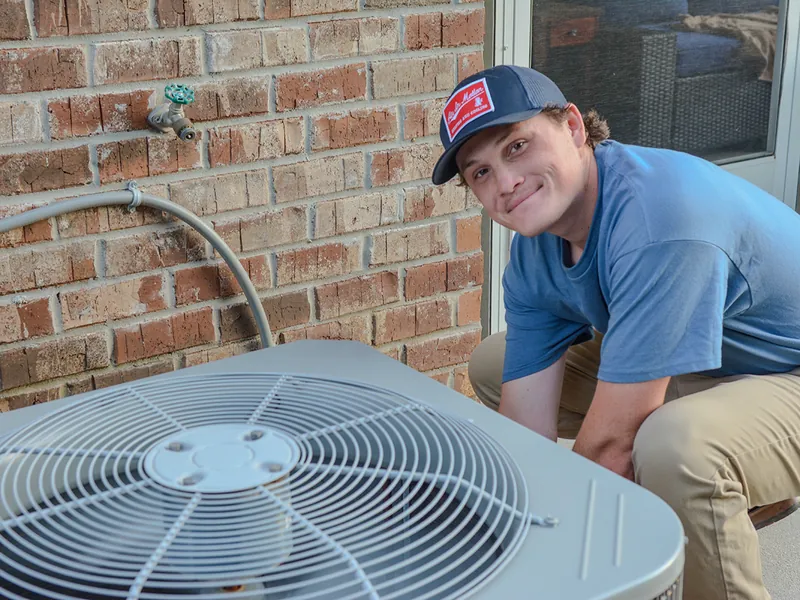
Aim helps Baldwin County homeowners compare their repair and replacement options.
We inspect the system, explain the findings and review the proposed work and price before you decide.
Here’s what to expect when you call Aim:
- Free in-home estimate: Discuss your home, current equipment and comfort concerns.
- Repair and replacement options: Review the diagnosis and compare the available choices.
- Written quote: Confirm the equipment, included work, exclusions and total price.
- Installation details: Confirm the schedule, applicable permits and setup checks before work begins.
- Next steps: Ask about the written warranty, maintenance requirements and how to request service.
We serve Daphne, Fairhope, Spanish Fort, Gulf Shores, Orange Beach, Foley, Robertsdale, Loxley, Bay Minette, Silverhill, Summerdale and Elberta. Call to confirm availability for your address.
Get Your Free AC Estimate
Request a written estimate based on your home, selected equipment and the installation work needed.
Call Aim Heating & Cooling at (251) 751-9908 or review installation options.
We’ll discuss your home and explain the available options so you can compare the proposed work and price.
If your AC is struggling, making unusual noises or using more energy, tell us what changed. A diagnosis can help you decide what to do next.
Aim Heating & Cooling provides AC installation, heat pump systems, maintenance plans, and financing options throughout Baldwin County, Alabama. Call (251) 751-9908 for a free estimate.
LET’S MAKE HOME FEEL GOOD AGAIN
Plan your new system.
Start with a free in-home estimate and a written quote.
Open 24/7 · 365 days a year · No after-hours fees
Choose “Get A Free In-Home Estimate” in the booking menu.