
15 Minute AC Check Before Summer in Fairhope
Use five accessible observations to prepare for a service conversation. This short checklist does not replace an inspection or require opening the equipment.
Before you depend on cooling in your Fairhope home, take a short look at accessible outdoor conditions and user controls. Take your time and pause whenever access is difficult; the checks stay outside the equipment.
Report visible debris or damage before relying on the system in warmer weather. Keep the equipment instructions handy and leave electrical, refrigerant and internal cleaning work to a technician.
Choose a safe time and location for the check. Do not enter standing water, reach into equipment or use a ladder just to finish the list. Stop if you encounter damaged wiring, smoke, sparking or a burning smell.
Step 1: Walk Out to Your Outdoor Unit and Look Down
Locate the outdoor unit from a safe, accessible position. Note whether landscaping or stored items obstruct service access or the unit’s airflow.
Compare clearance with the instructions for your exact model. If vegetation or objects are close to equipment, plan their safe removal without disturbing wiring or refrigerant lines.
Observe the grille and surrounding area without reaching through it or removing a cover. Ask about safe cleaning if leaves or debris are inside the unit; do not touch a fan even if it appears stopped.
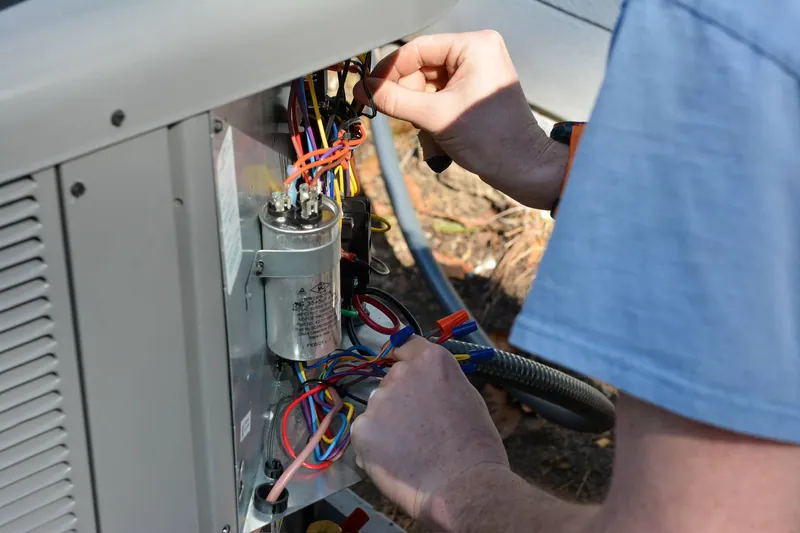
Step 2: Check the Fins — They’re More Important Than You Think
From outside the cabinet, look for visible dirt or damaged coil fins. The fins can be delicate, and their condition may deserve professional attention.
Describe the location and extent of visible damage. Ask whether the damage needs attention.
Do not put a butter knife, fin comb or other tool into the equipment based on this checklist. Ask a technician to assess whether cleaning or repair is appropriate. If you have a maintenance agreement, check the included work.
Step 3: Inspect the Copper Lines Going Into Your House
Without handling the lines, note any visible damaged or missing insulation and share its location with the technician. Insulation requirements depend on the equipment and line.
Ask which material, dimensions and installation method are appropriate before authorizing work. Leave work on refrigerant lines and their insulation to a qualified technician.
Step 4: Note Unexplained Stains or Water
Look at accessible ground around the unit. Note unexplained staining or water, but do not touch or sample an unknown substance. A stain alone cannot confirm a refrigerant leak.
If cooling performance has changed as well, report both observations. The technician may need to inspect and measure the equipment to find the cause.
You can call for AC repair to discuss the concern. Confirm current availability and charges. Aim has no after-hours fees.
Step 5: Observe Normal Operation Safely
Use the thermostat according to the equipment’s instructions and allowed outdoor conditions. Note the selected mode and whether the system responds. Do not repeatedly start or stop it for this check.
Listen from a safe distance. Record unusual rattling, grinding or humming without trying to identify a failed part from the sound. If equipment hums without starting or presents an electrical concern, stop using it and arrange service.
Indoors, note whether airflow and comfort are changing as expected. Record any room that stays uncomfortable or has noticeably weak airflow. Persistent poor cooling deserves assessment rather than repeated test runs.

Discuss the Property’s Actual Exposure and Access
Tell the technician about visible corrosion, previous storm or water exposure, and any condition that affects safe access.
If water is near electrical equipment, stay clear. Ask a qualified professional about the equipment location and site conditions before moving or raising a unit. Do not work around standing water to complete this list.
For a professional assessment, Aim Heating & Cooling provides HVAC service in Fairhope. Call (251) 751-9908 to confirm availability and diagnostic charges. Share the observations above and ask what the visit includes.
Frequently Asked Questions
How often should I have my AC professionally maintained in Fairhope?
Follow the manufacturer’s maintenance requirements. ENERGY STAR recommends pre-season contractor checkups. Discuss your equipment and use with the technician.
Can I clean my outdoor AC unit myself?
Follow the exact equipment instructions for any permitted exterior care. Do not open cabinets, spray electrical components or use a pressure washer. Ask about professional coil cleaning and, if relevant, the written coverage of your maintenance agreement.
My AC is running but the house isn’t getting cool — what’s wrong?
Settings, airflow, ducts and equipment faults can all contribute. Tell the technician what you checked and when the issue occurs. Schedule an AC repair assessment if the concern persists.
LET’S TALK ABOUT YOUR HOME
Make the next step a clear one.
Tell us about your equipment and what you have noticed.
Open 24/7 · 365 days a year · No after-hours fees
Call to confirm same-day availability. For an installation estimate, choose “Get A Free In-Home Estimate” in the booking menu.