
Why Your Heat Pump Keeps Switching Between Heat and AC | Fairhope, AL
Understand what the thermostat requests, record unusual behavior, and keep equipment controls and electrical testing in the right hands.
A Fairhope home can need heat on a cool morning and cooling later in the day. If your heat pump changes modes, start by checking what the thermostat is asking it to do. Watch whether the home stays comfortable and the changes follow your schedule.
This guide separates automatic temperature control from repeated short runs and comfort problems. Keep a record of the mode, indoor temperature, settings and symptoms so a technician can evaluate the actual pattern.
How Heat Pumps Handle Fairhope’s Spring Temperature Swings
A heat pump transfers heat into or out of the home. On compatible thermostats, an automatic heat/cool mode uses separate heating and cooling settings. That system mode is different from the fan’s AUTO setting.
For example, a home might fall below its heating setting in the morning and later rise above its cooling setting. Check the actual schedule and both setpoints instead of assuming that a single displayed number controls every mode.
The reversing valve changes the refrigerant-flow direction on a heat pump. A technician evaluates the equipment, controls and operating conditions together when investigating unusual behavior.

When the Switching Is Normal vs. When It’s a Problem
A mode change can be expected when the thermostat calls for the other mode. Look at whether the home reaches the intended temperature and whether the behavior follows the schedule. There is no universal normal number of switches or minutes per cycle.
Arrange a check if the system repeatedly starts and stops, cannot maintain comfort, seems stuck in one mode, or develops an unusual sound or smell. A sound alone does not identify the failed part. If there is a burning smell, smoke or sparking, stop using the equipment and seek appropriate help.
The separation between heating and cooling setpoints can affect automatic changeover. Controls also have other settings, such as temperature differentials and compressor protection delays. They are not interchangeable.
Before changing anything, note the thermostat model, mode, schedule and both setpoints. Also record recent changes such as a new thermostat or service visit. Avoid repeatedly changing modes to reproduce a problem.
Check the Heating and Cooling Settings Before Changing Them
Use the instructions for your exact thermostat. Google’s Nest mode guide explains that available modes and schedules depend on the thermostat and system. Ecobee documents a minimum separation between heat and cool setpoints, so ask your technician which configuration suits your equipment.
Choose heating and cooling settings that suit the occupants and the equipment. If automatic changeover seems excessive, ask your technician to check the setpoint separation and control configuration. Do not change staging, wiring or compressor-protection settings using a generic menu path from the internet.
If your thermostat does not provide a control you need, ask whether its features and wiring are compatible with the installed equipment before considering a replacement. A new thermostat is not automatically the solution to a mechanical or airflow problem.
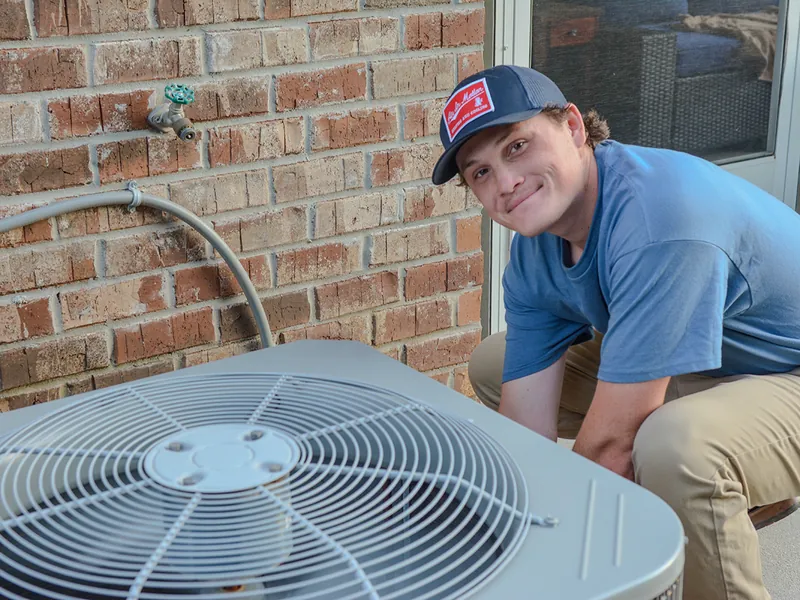
If the Outdoor Equipment Has Weather Exposure
Share any visible corrosion, storm exposure or previous electrical repairs with the technician. Those observations help the technician decide what to inspect.
Air that feels wrong for the selected mode can have several causes. Ask what tests support the diagnosis, whether the issue is in the controls or equipment, and what the proposed repair includes. Request a written price.
An HVAC technician serving Fairhope can inspect the controls and equipment. Do not open the cabinet, clean electrical contacts or apply grease yourself. For a heating problem, describe it when arranging heating repair.
Choosing Heat, Cool or Automatic Changeover
Heat mode calls for heating; cool mode calls for cooling. A compatible automatic heat/cool mode can serve both needs within the selected range. Use the mode and schedule that fit the household rather than changing settings only because the calendar says spring.
If you select a single mode, keep an eye on indoor conditions because the other mode will not respond automatically. Do not assume that sunlight or an open window will keep every person, pet or room comfortable.
Review the actual forecast and indoor conditions as they change. Keep heating available when the household still needs it.
To compare performance, keep the same observation period and record changes in weather, occupancy and comfort as well as energy use.
A service visit is an opportunity to review the schedule and controls. If you already have or are evaluating a maintenance agreement, confirm its written scope and terms; joining a plan is not required to ask about a problem.
How often should a heat pump switch between heating and cooling?
There is no universal daily count. Check whether changes follow the thermostat’s heating and cooling settings. Repeated starts, persistent discomfort or a system stuck in one mode warrant an assessment rather than an automatic deadband change.
Can frequent mode switching damage my heat pump?
The equipment is designed to change modes, but unusual cycling should be assessed. Record what it does and when; switch count alone cannot establish damage or predict a component’s remaining life.
What does it cost to replace a heat pump reversing valve?
The price depends on the diagnosis, component, equipment and repair scope. Ask for the findings and a written quote before authorizing work. A solenoid and a complete reversing-valve repair are different jobs.
If your heat pump is behaving unusually, call (251) 751-9908 to confirm availability at your address. Explain whether you need AC repair or help with heating. Ask about diagnostic charges and the proposed work before authorizing service.
LET’S TALK ABOUT YOUR HOME
Make the next step a clear one.
Tell us about your equipment and what you have noticed.
Open 24/7 · 365 days a year · No after-hours fees
Call to confirm same-day availability. For an installation estimate, choose “Get A Free In-Home Estimate” in the booking menu.