AC Will Not Start on First Warm Day in Daphne AL
A stalled outdoor unit does not establish a capacitor diagnosis. Check user controls, keep clear of the equipment, and explain the symptoms when you call.
If the indoor fan starts but the outdoor AC does not, note what you see and hear from a safe distance. This guide explains what to report when arranging service in Daphne.
A capacitor is one possible cause of a starting problem. Thermostat, power, controls, motor and other equipment faults can also be involved.
You can review user controls and describe visible behavior without opening equipment. Electrical inspection and testing belong with a qualified technician.
What a Capacitor Does—and Why the Model Matters
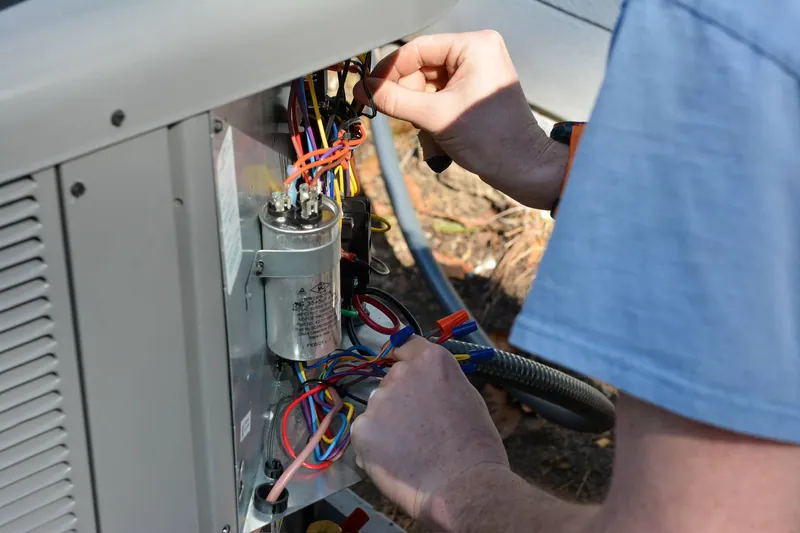
Some motor circuits use start or run capacitors; the type and arrangement depend on the equipment. A dual-run component can serve two circuits, but not every system uses the same design.
A starting problem can sound similar even when the failed component differs. A technician needs the equipment identification and appropriate tests before choosing a replacement.
The actual model and circuit requirements determine the correct parts. Share the model number if it is safely accessible.
Why a Previously Working System May Not Start
Equipment condition can change between seasons. Tell the technician when it last worked normally and whether there have been storms, power interruptions or repairs since then.
Useful history includes the following:
- Any previously diagnosed electrical or starting problem.
- Recent power interruption, visible damage or unusual smell.
- Whether the fault is constant or intermittent.
- The exact equipment model and any recent thermostat change.
Keep previous invoices and test results available so the technician can compare them with the current findings.
What You Can Observe Without Opening the Unit
Limit your checks to accessible user controls and external observations. Do not remove panels, insert tools through a grille or handle electrical components.
1. Check the thermostat display. Note the selected mode, setpoint, indoor temperature and any error message. Follow its user instructions, including any normal startup delay. Avoid repeated restart attempts.
2. Observe from outside the cabinet. Report whether the indoor fan and outdoor equipment run, and describe unusual humming or clicking. A visible or audible symptom is not a confirmed capacitor diagnosis.
3. Leave a stalled fan alone. Never push a blade with a stick or another object, whether power appears on or off. Shut the system off at the thermostat when safe and arrange professional service.
If there is smoke, sparking, a burning smell or damaged wiring, stay clear and seek appropriate help. Do not continue running equipment to reproduce the symptom.
Why We Don’t Recommend the DIY Capacitor Swap
Capacitor testing and replacement require the correct equipment, specifications and electrical safety procedures. Leave this work to a qualified technician.
Reasons to leave this work to a qualified technician include:
- Stored energy: Capacitors can retain a dangerous electrical charge after power is disconnected. Do not touch or attempt to discharge one.
- Correct specifications: Replacement parts must suit the actual equipment and circuit.
- Diagnosis: The technician should establish what failed and whether another problem contributed.
When arranging AC repair, provide the model number if safely accessible and describe the starting behavior. Ask about diagnostic charges, parts availability, the proposed repair and its written price.

Ask for a Diagnosis and Written Repair Scope
Ask for a written repair quote. Compare the diagnosis, included work, parts, warranty and any additional testing.
For future care, consider these two questions:
1. What maintenance does this equipment require? Follow the manufacturer’s requirements and keep service records. If you have a maintenance agreement, check its actual scope and terms.
2. How should it be operated between seasons? Do not run cooling just to keep a capacitor active. Use the system within the manufacturer’s operating limits and ask about model-specific off-season care.
For a system that will not start in Daphne, call (251) 751-9908. Confirm availability at your address and any diagnostic charge. A visit or same-day repair depends on the actual problem, schedule and needed parts.
FAQ: AC Capacitor Questions
How long does an AC capacitor last?
Capacitor life varies with the component, operating conditions and equipment. Ask the technician to test a suspected fault and explain whether replacement is needed.
Can a bad capacitor damage my compressor?
A starting-circuit problem can stress other equipment. Stop using a system that has concerning symptoms and arrange diagnosis.
Why does my AC work sometimes but not others?
Intermittent startup can have several causes, including controls, electrical supply and equipment faults. Record the timing, settings and symptoms, and arrange assessment. Do not assume a capacitor is the cause or keep restarting the unit to make it run.
LET’S TALK ABOUT YOUR HOME
Make the next step a clear one.
Tell us about your equipment and what you have noticed.
Open 24/7 · 365 days a year · No after-hours fees
Call to confirm same-day availability. For an installation estimate, choose “Get A Free In-Home Estimate” in the booking menu.