AC Not Cooling Baldwin County Troubleshooting Guide
Start with what you can safely observe: whether the system starts, whether air moves, and whether ice or water is visible. Keep electrical and refrigerant work with a qualified technician.
If your home is getting warmer, first note whether the system is not starting, running without cooling, or delivering weak airflow. Those are different starting points; none identifies a failed part by itself.
Use the checks below for thermostat settings, an accessible filter and visible obstructions. Stop for smoke, an electrical burning smell, water near electrical equipment or ice. For fire or immediate danger, leave the area and call 911. Move to a cooler place if indoor heat becomes unsafe; CDC explains heat-illness warning signs.
Quick Diagnosis: Is Your AC Running At All?
First, let’s figure out what’s happening:
| What you notice | Safe next step |
|---|---|
| System does not start | Check displayed thermostat settings; see Section 1. Do not open electrical panels or repeatedly reset a breaker. |
| Air moves but is not cooling | Inspect the designated filter only if safely accessible; see Section 2. |
| Water near the indoor unit | Avoid wet electrical equipment and arrange service; see Section 5. |
| Visible ice | Leave cooling off and request diagnosis; see Section 4. |
| Weak airflow | Look for furniture blocking vents; see Section 3. |
Safe Checks Before Service
1. Thermostat Issues
Check the thermostat display and the instructions for your model.
- Select COOL if cooling is needed. Check that the selected temperature is below the displayed room temperature.
- Check the fan setting and any scheduled or away setting. A fan running alone is not proof that cooling is operating.
- If batteries are replaceable, follow the thermostat instructions. Do not touch wiring.
- Allow any manufacturer-specified startup delay. Lowering the setting much further does not make the air cool faster.
If the display stays blank or the system does not respond, report what you observed and arrange service. A thermostat symptom does not prove the thermostat itself has failed.
2. A Dirty or Unsuitable Air Filter
A restricted filter can affect airflow and cooling. Check the designated filter location only if it is safely accessible, with the system off as directed by its instructions. Do not remove an equipment service panel.
Use the specified filter size, type and airflow direction. Replace it according to the equipment and filter instructions; ask for help if you are unsure which filter is suitable. Do not run the system without a filter.
There is no single replacement interval or MERV rating for every home and system. Note the last change date and conditions such as pets or renovation dust when discussing a schedule.
3. Blocked Vents or Registers
Look for furniture, rugs or stored items blocking return grilles or supply registers. Keep the intended openings clear; do not close registers as a troubleshooting shortcut.
Note whether weak airflow affects one room or the whole home. Share that pattern with the technician. A hand or tissue check cannot establish whether the problem is the blower, ducts, filter or another component.
4. Frozen Evaporator Coils
If ice is visible on an accessible refrigerant line or other exposed part, turn cooling off at the thermostat and arrange service. Do not open the air handler to look for ice.
- Do not chip, scrape or heat the ice.
- Keep clear of water near electrical equipment.
- With cooling off, check only the accessible filter and visible vent obstructions.
- Ask when the system can safely run again. Thawing does not establish that the underlying problem is fixed.
Restricted airflow, refrigerant problems and other faults can cause freezing. Ice alone does not diagnose a leak. Carrier explains why frozen equipment needs attention.
5. Clogged Condensate Drain
Cooling creates condensation that should drain through the system’s intended drain arrangement. Backed-up water or an activated overflow safety switch needs attention; do not bypass the switch.
Look only from a safe, accessible location for water around the unit or a visible drain outlet. No drip at one moment does not establish a clog. Do not enter an unsafe attic or open equipment to inspect it.
For suspected backup, turn cooling off if the thermostat is safely accessible and call for service. Do not pour bleach, vinegar or other chemicals into an unidentified line or pan. Ask for the correct maintenance method for your actual installation. Carrier describes condensate-drain symptoms and professional service.
When to Call a Professional
Leave electrical components, internal coil work and refrigerant service to a qualified technician. The following observations help describe the problem; they do not confirm a failed part.
6. Low Refrigerant
Signs:
- Cooling has changed or the home is not reaching its setting.
- Ice or unusual sounds are present.
- Operation has changed without an obvious settings change.
These symptoms have several possible causes. Ask what testing supports a refrigerant diagnosis, whether a leak or earlier charging issue is involved, and what repair is proposed. Refrigerant is not normally consumed in operation; a routine top-off is not a substitute for finding the cause.
7. Compressor Problems
Signs:
- Unusual noises, changes in outdoor operation or a tripped breaker deserve assessment.
- Do not reach into the unit, attempt to start a fan by hand or repeatedly reset a breaker.
A compressor is one part of the cooling circuit, and similar symptoms can come from other components. If a compressor repair is proposed, compare the diagnosis, warranty, parts availability and written repair price with appropriate replacement options. Age alone does not settle the decision.
8. Electrical Issues
Signs:
- Smoke, sparks, an electrical burning smell or repeated breaker trips are warning signs.
- For fire or immediate danger, leave and call 911. Otherwise keep clear of the equipment and arrange qualified service.
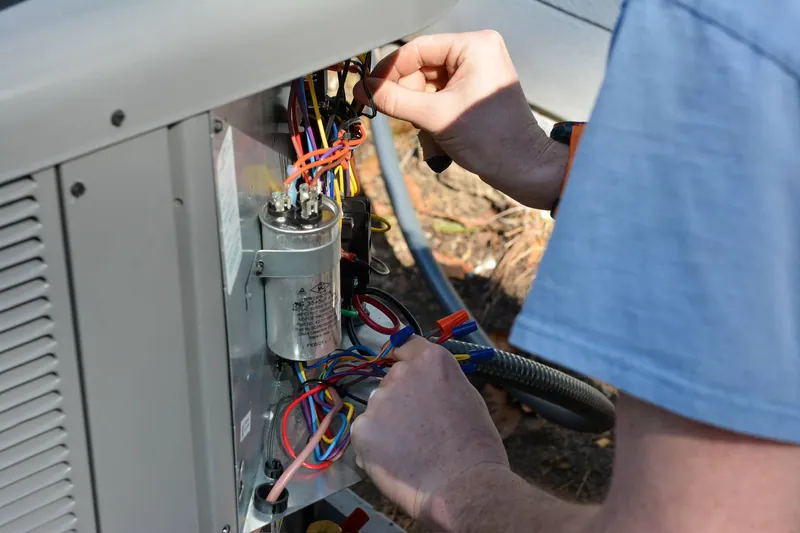
Do not open electrical compartments, test wiring or replace a capacitor yourself. Components can remain dangerous even when the thermostat is off.
What to Have Ready When You Call
- Your address and a callback number.
- Whether the system starts and whether air is moving.
- The displayed room temperature and selected setting.
- Any visible ice, water, unusual sound or smell, observed from a safe place.
- Filter and recent service history, if known.
These details help describe the visit needed. They do not establish the diagnosis over the phone.
Comfort Concerns to Discuss With the Technician
Tell the technician whether the home feels warm, damp or uneven from room to room. If coastal exposure, attic ducts or a recent addition is relevant to your property, include it in the discussion.
Ask what measurements support a recommendation for duct repair, humidity control, electrical protection or different equipment. Compare the proposed work with the measured condition of your home and the equipment’s requirements.

When Aim Can Help
Call (251) 751-9908 with your address and symptoms. Aim is open 24/7/365 with no after-hours fees. Call to confirm same-day availability and the available visit window.
Ask for the diagnostic or service-call charge, what the visit covers, and the written price of proposed work before approving it. Ask which recommendations are necessary and which are optional.
For a non-emergency request, schedule online. Booking does not replace emergency assistance.
Frequently Asked Questions
Why is my AC running but not cooling?
Running fans do not prove that the cooling circuit is operating correctly. Check the thermostat settings and designated accessible filter. Leave cooling off if ice or another apparent equipment fault is present and arrange service. The running-but-not-cooling guide explains seven possible causes.
How often should I change my AC filter in Baldwin County?
Follow the equipment and filter instructions rather than a single calendar rule. Record the last change date, and ask which size and type fit your system. If the designated filter is not safely accessible, arrange help.
Why does my AC freeze up?
Freezing is a symptom with several possible causes, including airflow or refrigerant problems. Leave cooling off, do not open the unit or heat the ice, and arrange diagnosis. Thawing alone does not establish a safe restart.
How much does AC repair cost in Baldwin County?
The price depends on the diagnosed fault, parts, access, labor and warranty. Ask for the service-call charge and a written repair scope and price. Have the quote identify the equipment and work included.
Should I repair or replace my AC?
Compare the actual diagnosis, condition, repair history, warranty and available parts with a suitable replacement proposal. A single age cutoff or percentage rule cannot choose for every home.
Why is my electricity bill so high when my AC runs constantly?
Compare actual billed energy use and operating conditions, then note whether the home maintains its setting. Some variable-capacity equipment operates for extended periods. Runtime alone does not establish a fault, but lost cooling, ice or a marked unexplained change deserves assessment.
LET’S TALK ABOUT YOUR HOME
Make the next step a clear one.
Tell us about your equipment and the change you have noticed.
Open 24/7 · 365 days a year · No after-hours fees
Call to confirm same-day availability. For an installation estimate, choose “Get A Free In-Home Estimate” in the booking menu.