Nobody wants to replace their air conditioner.
We get it. You’re Googling “signs ac needs replacing” right now, probably hoping this article tells you everything is fine — just get a repair and move on. We’ve sat in hundreds of Baldwin County living rooms with homeowners who feel the same way. Nobody’s excited about writing a check for a new system.
So here’s our promise: this article is going to be straight with you. We’re going to walk through the real warning signs, and some of them might apply to your situation and some won’t. If your system just needs a $300 capacitor, we’ll tell you that. We don’t sell new units to people who don’t need them.
But if the signs are stacking up? We’ll help you see that clearly too, because pouring money into a dying system is worse than replacing it.
How Long Do AC Units Actually Last on the Gulf Coast?
You’ve probably seen articles saying air conditioners last 15 to 20 years. That number comes from national averages — and it’s misleading if you live in Baldwin County.
Here’s the reality: your AC works harder than almost any system in the country.
Baldwin County has a cooling season that stretches roughly nine months — from March through November in most years. That means your air conditioner logs nearly twice the runtime hours of a system in Michigan or Ohio. Combine that with our relentless humidity (your AC isn’t just cooling air — it’s wringing moisture out of it constantly), and you’ve got a system under serious stress.
If you live near the coast — Gulf Shores, Orange Beach, Fort Morgan, Perdido Key — there’s another factor. Salt air corrodes outdoor condenser coils, electrical connections, and copper lines faster than inland air. We’ve seen coastal systems that look 20 years old after 10.
Realistic AC lifespan in Baldwin County: 8 to 12 years. With consistent maintenance, you might push toward the higher end. Without it, eight years is generous.
The 10 Warning Signs — From “Maybe” to “Definitely”
We’ve organized these from early warning signals to clear-cut signs it’s time. The more of these that apply to your system, the stronger the case for replacement.
1. Your System Is 10 to 15+ Years Old
Age alone doesn’t mean you need a new AC. We’ve repaired systems that were 18 years old and had another good year or two in them. But age sets the context for everything else on this list.
If your system is under 8 years old, most problems are worth fixing. If it’s between 10 and 12, start weighing repairs more carefully. Once you’re past 15 — especially on the Gulf Coast — you’re on borrowed time, and every repair is a gamble on how much longer the compressor holds out.
Gulf Coast reality check: That 15-year-old system has the equivalent wear of a 25-year-old unit up north. The math is different here.
2. Repairs Are Becoming a Regular Thing
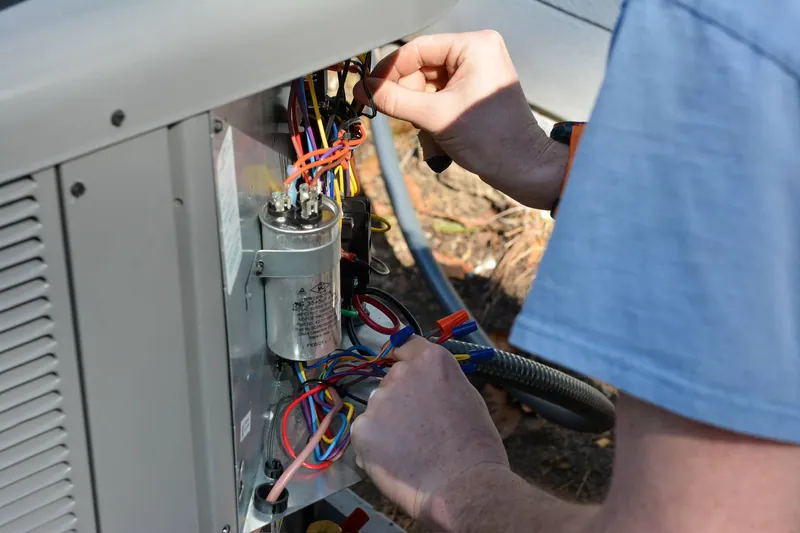
One repair call a year? That’s life with an older system. Things wear out — capacitors fail, contactors burn up, drain lines clog. Normal stuff.
But if you’re calling for AC repair two or three times a year, that’s a pattern. Your system is telling you it’s wearing out across the board, not just in one spot. Fixing one thing only reveals the next weakest link.
Think of it this way: if you spent $800 on repairs last year and you’re looking at another $600 this year, you’ve invested $1,400 in a system that’s probably going to need another repair in six months. At some point, that money is better spent toward a new system that won’t need anything for years.
3. The Repair Costs More Than Half a New System
This is the rule HVAC professionals use among ourselves, and it’s worth knowing: if a single repair costs more than 50% of what a new system would cost, replace it.
Here’s what that looks like in real numbers. A new AC system installed in Baldwin County typically runs $5,000 to $8,500, depending on size and efficiency. So if your repair estimate is north of $3,000 — say, a compressor replacement or an evaporator coil on an older unit — the 50% rule says you’re better off putting that money toward new equipment.
Why? Because that $3,000 repair doesn’t reset the clock. You’ve still got an aging system with aging components, and the next failure could be six months away.
4. Your Energy Bills Keep Climbing
Pull up your Alabama Power bill from two or three years ago and compare it to this summer. If the numbers are climbing and you haven’t added square footage or new appliances, your air conditioner is a likely suspect.
AC systems lose efficiency as they age. Coils get dirty (even with maintenance), refrigerant lines develop micro-leaks, compressors work harder to produce the same cooling. A system that started at 14 SEER might be effectively running at 10 or 11 SEER after a decade.
The difference matters. Upgrading from a worn-out 10 SEER system to a new 16 SEER2 unit can cut your cooling costs by 30% to 40%. In Baldwin County, where cooling bills can run $200 to $350 a month from June through September, that’s real savings — potentially $600 to $1,000 a year.
5. Some Rooms Stay Hot No Matter What
You’ve got the thermostat set to 73, and the living room is comfortable, but the back bedrooms feel like 78. You close vents, you open vents, you run ceiling fans. Nothing helps.
Uneven cooling has a few possible causes — ductwork problems, insulation gaps, or an undersized system. But if your system used to cool evenly and now it doesn’t, the most common culprit is a system losing capacity. The compressor isn’t pumping like it used to. The blower motor is weakening. The system simply can’t move enough cool air to reach every room.
A quick way to check: put a thermometer in the problem room and one near the thermostat. If there’s a 5+ degree gap, your system is struggling.
6. Strange Noises That Keep Coming Back After Repairs
Every AC makes some noise. A quiet hum, the rush of air through vents, the click of the system starting up — all normal.
What’s not normal: grinding, screeching, banging, or rattling that goes away after a repair and then comes back a few weeks later. That’s a sign the underlying problem is structural — a failing compressor, a motor with worn bearings, or a fan assembly that’s coming apart. You can replace individual components, but if the noise keeps returning, the system is telling you it’s done.
7. Your House Feels Humid Even With the AC Running
This is the big one for Baldwin County, and it’s the sign most homeowners overlook.
Your air conditioner does two jobs: it cools air and it removes moisture. In a place where summer humidity routinely hits 80% to 90% outside, dehumidification is arguably the more important job. If your house feels clammy, if windows fog up, if you can feel the stickiness even at 72 degrees — your system is losing its ability to dehumidify.
This happens when the system short-cycles (runs briefly, shuts off, runs again) or when the evaporator coil can’t pull enough moisture from the air. Either way, you’re not just uncomfortable — you’re inviting mold growth. In Baldwin County, indoor humidity above 60% can trigger mold problems fast, especially in closets, under sinks, and in ductwork.
If your home feels muggy with the AC running and you’ve already had the system checked, dehumidification failure is one of the clearest signs it’s time for new equipment. Modern systems, especially heat pumps with variable-speed compressors, manage humidity dramatically better than older single-stage units.
8. You’re Still Running on R-22 Refrigerant
If your system uses R-22 (also called Freon), this needs to be on your radar. R-22 production was banned in the United States in 2020, and the only supply left is reclaimed or stockpiled.
Here’s what that means for your wallet in 2026:
- R-22 refrigerant: $90 to $250 per pound (and rising every year)
- R-410A refrigerant: ~$15 per pound
- Newer R-454B refrigerant: Similar cost to R-410A
A typical residential system holds 6 to 12 pounds of refrigerant. If you have a significant leak and need a full recharge, you’re looking at $540 to $3,000 just for the refrigerant — not including the labor to find and fix the leak.
Beyond cost, any system still running R-22 is at least 15 years old (R-22 systems haven’t been manufactured since 2010). That puts it well past its Gulf Coast life expectancy. Parts specific to R-22 systems — compressors, coils, metering devices — are getting scarce and expensive too.
Our honest take: If your R-22 system needs any repair over $500, it’s time to seriously consider replacement.
9. The System Cycles On and Off Constantly
A healthy AC system runs in cycles — typically 15 to 20 minutes on, then a rest period, then on again. If your system kicks on for 5 minutes, shuts off, starts again 3 minutes later, and repeats all day, that’s called short-cycling.
Short-cycling burns more electricity (the startup is the hardest part for a compressor), wears out components faster, and — critically — doesn’t run long enough to properly dehumidify your home. It’s a sign of a refrigerant problem, a failing compressor, an electrical issue, or a system that’s simply oversized or undersized for your home.
One or two of these causes are repairable. But if your tech has already checked refrigerant levels, cleaned the coils, and replaced the thermostat and it’s still happening, the system has a deeper problem that repairs won’t solve.
10. You’re Calling for Emergency Repairs in the Middle of Summer
This is the sign that makes the decision for you.
If your AC fails during a July heat wave — when it’s 95 degrees with 85% humidity — your system failed under load. That’s the equivalent of an engine failing on the highway, not in the driveway. It means the system couldn’t handle the conditions it was built for.
Every HVAC company in Baldwin County is slammed in July and August. Wait times for emergency repair stretch to days. And if the repair is a compressor or coil, the part might take a week to arrive while your family sweats it out.
If you’ve had even one mid-summer breakdown on a system over 10 years old, plan ahead. Getting a new system installed in spring — before the rush — means you pick your equipment, schedule on your terms, and never sweat through a July night waiting for a part.
Repair vs. Replace: The Quick Decision Guide
Not everyone with one warning sign needs a new system. Here’s a simple way to think about it:
Lean toward repair when:
- Your system is under 10 years old
- This is your first or second repair this year
- The repair cost is under $1,000
- The system still cools evenly and manages humidity
- It uses R-410A or newer refrigerant
Lean toward replacement when:
- Your system is 12+ years old (or 10+ on the coast)
- You’ve had 3+ repair calls in the past 18 months
- The repair estimate exceeds $2,500
- Energy bills have climbed 20%+ with no other explanation
- The system uses R-22 refrigerant
- Humidity control has gotten noticeably worse
- You’ve had a mid-summer breakdown
Here’s the thing we tell every customer: if your situation is borderline, we’ll tell you that too. Our techs will show you exactly what’s wrong, explain the repair cost vs. what a new system would run, and give you an honest recommendation. We fix more systems than we replace — because that’s usually the right call. But when it’s time, we won’t sugarcoat it.
Why Replacing in 2026 Is Actually Smart Timing
If the signs are pointing toward replacement, there’s a silver lining: 2026 is a genuinely good year to buy a new AC system. Here’s why:
Federal tax credits have expired. The federal Energy Efficient Home Improvement Credit (Section 25C) expired on December 31, 2025. A system installed in 2026 does not qualify. If you installed a qualifying system in 2025, you can still claim it on your 2025 tax return. Alabama Power and Baldwin EMC rebates may still apply.
New refrigerant means better efficiency. As of January 2026, all newly installed residential systems use R-454B refrigerant, which has a dramatically lower environmental impact than R-410A. More importantly for your wallet, the systems designed around R-454B are built to higher SEER2 efficiency standards. The minimum in the Southeast is now 14.3 SEER2, and most mid-range units hit 16 to 18 SEER2 — meaning significantly lower electricity bills than whatever your aging system is producing.
Variable-speed technology is more affordable. Five years ago, variable-speed compressors were a premium feature. Now they’re available in mid-range systems. The difference is dramatic: instead of blasting cold air at full power and then shutting off (which is terrible for humidity), variable-speed systems ramp up and down to match the load. Your home stays at a consistent temperature, humidity stays in check, and the system uses less energy doing it.
Financing makes it manageable. Nobody should have to drain their savings for a new AC. We offer financing options that can break a $7,000 system into monthly payments that are often comparable to what you’d spend on repeated repairs. Ask us about current options when you call.
What Happens When You Call Aim
Here’s exactly what to expect:
- You call (251) 751-9908 or book online. We’ll get a tech to your home, usually within 24 hours.
- We diagnose first. Our tech will inspect your system thoroughly — not just the obvious problem, but the overall condition. Refrigerant levels, electrical connections, coil condition, airflow, ductwork. The whole picture.
- We give you the real numbers. What the repair costs. What a new system would cost. What your energy savings look like over 5 years. No pressure, no games — just information so you can make the call.
- If repair makes sense, we repair it. And we’ll tell you what to watch for so you’re not blindsided down the road.
- If replacement makes sense, we help you choose. We’ll size the system properly for your home (oversized systems are a huge problem in Baldwin County — they short-cycle and can’t dehumidify), recommend the right efficiency level for your budget, and handle the installation from start to finish.
We’ve been doing this across Baldwin County — from Daphne to Gulf Shores, Fairhope to Foley, Spanish Fort to Orange Beach. The Gulf Coast throws everything it has at your AC system. When it’s time for a new one, you want a company that understands that.
The Bottom Line
If you read through this list and only one or two signs apply — especially the milder ones — you’re probably fine with a repair. Keep up with maintenance and monitor the situation.
But if you’re nodding along to four or five of these? It’s time to have the conversation. Not because we want to sell you something, but because continuing to patch an aging system in Baldwin County’s heat and humidity is a losing game. The money you spend on repairs doesn’t come back. The comfort you’re sacrificing is real. And the risk of a mid-summer breakdown isn’t worth the stress.
Call Aim Heating & Cooling at (251) 751-9908. We’ll come out, look at your system, and tell you the truth — even if that truth is “you just need a new capacitor.” That’s how we’ve always done it, and it’s why our customers keep calling us back.
Aim Heating & Cooling serves homeowners across Baldwin County, Alabama, including Daphne, Fairhope, Spanish Fort, Gulf Shores, Orange Beach, Foley, Robertsdale, Loxley, Bay Minette, Perdido Key, Magnolia Springs, Summerdale, Silverhill, and Fort Morgan. Call (251) 751-9908 for honest AC repair and replacement.